
Written by Nicholas Hadnutt
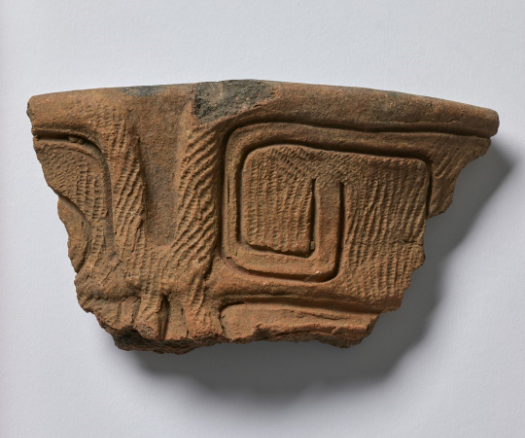
History isn’t always written in gold or grand marble columns. Sometimes, the most profound stories are told in the gritty, thumb-pressed ridges of a ceramic rim. Between approximately 14,500–300 BCE, a Neolithic society thrived in Japan. Known as the Jōmon people, they were named after their distinctive pottery. At first glance, the fragments of their pots and bowls capture our imaginations with their fantastic, flowing shapes and decorations impressed into the surface of the vessel. Jōmon is a Japanese word that translates to “rope/cord pattern” or “cord-marked” and reflects this community’s use of raw materials in their world, particularly their rope or cordage, that they impressed into wet clay to decorate their pottery.

However, on greater reflection we can move past our initial thoughts of the aesthetic of these fragments to consider that they are fragments that connect us with a complex social history. The distinctive decorations aren’t just decorative – they reveal a deep intent to convey the culture, beliefs and thoughts of the Jōmon people through the medium of clay. These vessels were not just domestic equipment but symbols of a community’s identity and spiritual life, occurring almost 15,000 years ago.

The Jōmon people were among the earliest people in the world to develop pottery, challenging the long-held archaeological understanding that ceramics only arrived with the dawn of farming. Commonly held beliefs surrounding human evolution posited that people move from hunter-gatherer lifestyles to sedentary farming first and then began to create the tools and material culture we now associate people living in permanent conditions. The Jōmon people, however, were largely semi-sedentary hunter-gatherers. They utilised the diverse resources of the Japanese archipelago and developed pottery to boil, steam, and store food. This technological leap allowed for better nutrition and population growth without a total reliance on farmed grain.

The fragmentary remains of the pottery made by these people connect us to a community who thrived many thousands of years ago during one of humanity’s most notable periods of transformation, giving rise to our modern way of living communally in cities. The Jōmon people proved to be a complex society of people who valued the aesthetic as much as the functional. They created a material culture that defied traditional archaeological thought and gave rise to new understandings of our global development. And, given the immense age of these fragments, they offer us an opportunity to reflect on the Jōmon people’s relationship with their natural world – which they sought to incorporate into their everyday lives.
Explore Jōmon ceramics in Fragile & Forever: Ceramics from the Queensland Museum Collection, a free exhibition now on at Queensland Museum Kurilpa: museum.qld.gov.au/kurilpa/whats-on/fragile-and-forever




You must be logged in to post a comment.