
Written by Imelda Miller
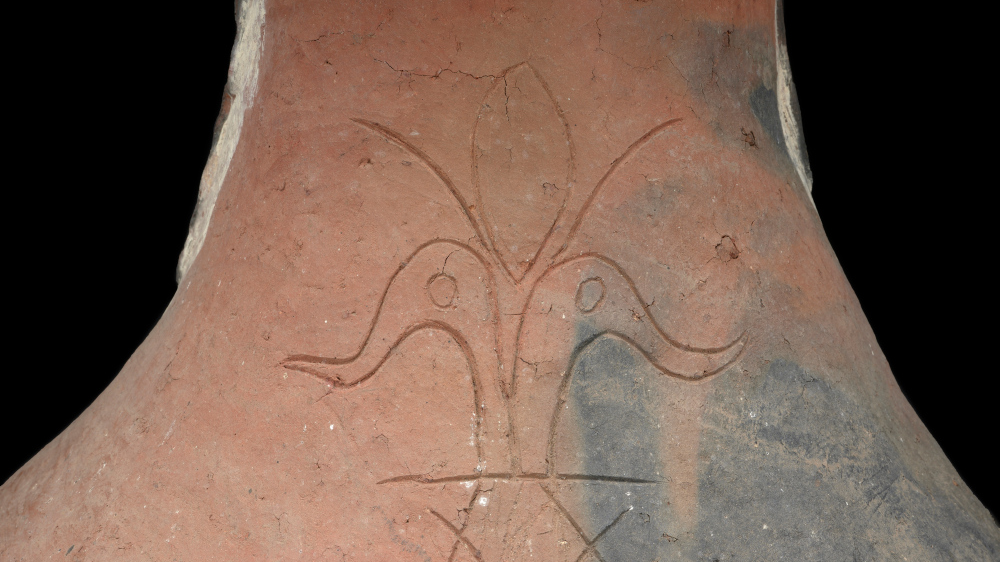
This sago storage pot called Damarau comes from Aibom Village, Chambri Lake, Ambunti sub-district, East Sepik, Papua New Guinea. This particular pot was collected in 1971, prior to Papua New Guinea independence in 1975.
A beautiful, handcrafted storage vessel, these pots would have been traditionally used to store sago flour, a starch extracted from palm trees. Sago pots, like this one were traded along to villages along the Sepik River in Papua New Guinea. The pots are traditionally made by women, who are renowned in the Sepik region for traditional clay stove making – a tradition passed down through the generations.
Women collect the clay and make the pots, and then the intricate face designs are crafted and painted by men. The faces on the pots symbolize animals, people or bush spirits and are a reminder of the community’s cultural, environmental and spiritual connections.

The clay used to make these pots is unique to Aibon Village. Darkened by smoke and shaped by hand these clay vessels are deeply connected to daily life and are imbued with spirit of the village from those who collected the clay, to the makers marks and the uniqueness of surrounding landscapes from which they emerge. These pots hold more than food, they carry memory, labour and cultural identity.
Image: Google Maps
The process of making sago is communal and time-intensive. Sometime when the sago is prepared it is served alongside fish, greens or coconut.
Pots like this one are a good reminder of the beauty held in everyday objects that can embody deep cultural connections to people, places and connection.
Discover this Sago pot in Fragile and Forever: Ceramics from the Queensland Museum Collection, a free exhibition now on at Queensland Museum Kurilpa in Brisbane: museum.qld.gov.au/kurilpa/whats-on/fragile-and-forever

You must be logged in to post a comment.