
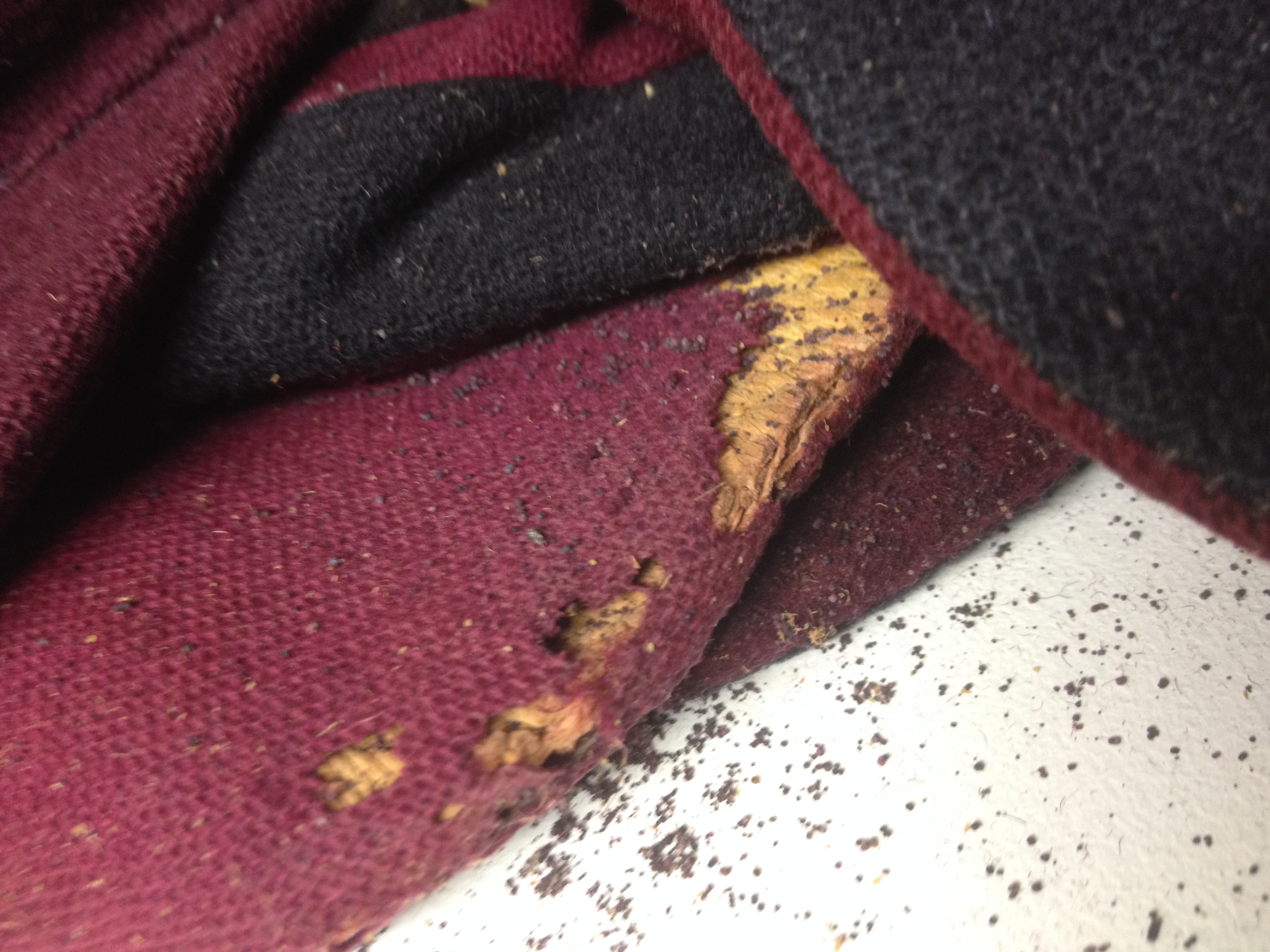
The curse of the clothes moth!
A recent job has reminded me of how devastating clothes moth infestations can be in textile collections. There are two types of moth species that cause damage, the casemaking clothes moth (Tinea pellionella) and the webbing clothes moth (Tineola bisselliella). More information on each clothes moth species can be found at: https://www.aepma.com.au/PestDetail/98/Clothes%20Moth
Carpet beetles can also cause major textile damage.
Serious infestations can develop undetected in collection storage and display areas causing significant damage particularly to animal fibres such as wool, silk and fur. Moths prefer dirty fabric when laying their eggs and are attracted to textiles containing human sweat or other liquids that have been spilled onto them. It is the fabric-eating larvae that causes damage not the adult moths.
If you find infested objects, it is important to deal with the problem as quickly as possible.
If the objects have been badly damaged, are very fragile, or have significant heritage value, it is strongly recommended that you seek advice from a qualified textile conservator before undertaking any treatment.
If the textiles do not contain wood or glass components, they may be suitable to freeze. When packing collections for freezing, make sure objects that are badly damaged and/or fragile are properly supported during the packing process. See the State Library of Queensland info guide on safe freezing methods: http://www.slq.qld.gov.au/resources/preserving-collections/preservation_guides/freezing-water-damaged-and-insect-infected-collections
Once the objects have been frozen and safely defrosted, careful brush vacuuming can effectively remove larvae as well as surface dirt, hair and lint which could sustain future infestations. Be sure to also thoroughly vacuum storage and/or display areas including edges of carpets, along baseboards, underneath furniture, inside closets and other undisturbed areas where clothes moth larvae feed. Refer to the following websites for instructions on how to safely vacuum textiles: http://www.museumtextiles.com/uploads/7/8/9/0/7890082/vacuuming_textiles.pdf
http://www.powerhousemuseum.com/pdf/preservation/how_to_brush_vacuum_an_object.pdf
Remember that freezing will not prevent future infestations.
You can minimise the risk of infestations by implementing a collection-wide Integrated Pest Management (IPM) plan:
- Ensure collection objects are kept clean.
- Keep storage and display areas uncluttered and dust-free.
- Inspect collections regularly to ensure early detection of insect activity.
- As well as visual inspection of objects, use insect traps. Check fortnightly during hot humid weather and monthly during cooler drier months. More regular checking will be needed if a problem is suspected.
- Deal with infestations promptly using non-toxic treatments such as freezing and anoxia.
- For more information on implementing an IPM program refer to: http://museumpests.net/resources-2/resources-web-resources/resources-ip-programs/
- More tips available at: http://www.english-heritage.org.uk/content/learn/conservation/2543455/2543024/Top_Ten_Tips_for_Preventing_Clothes_Moth_Infestations.pdf

Casemaking clothes moth frass. 
Casemaking clothes moth larvae cases on the inside of a felt hat.



You must be logged in to post a comment.