
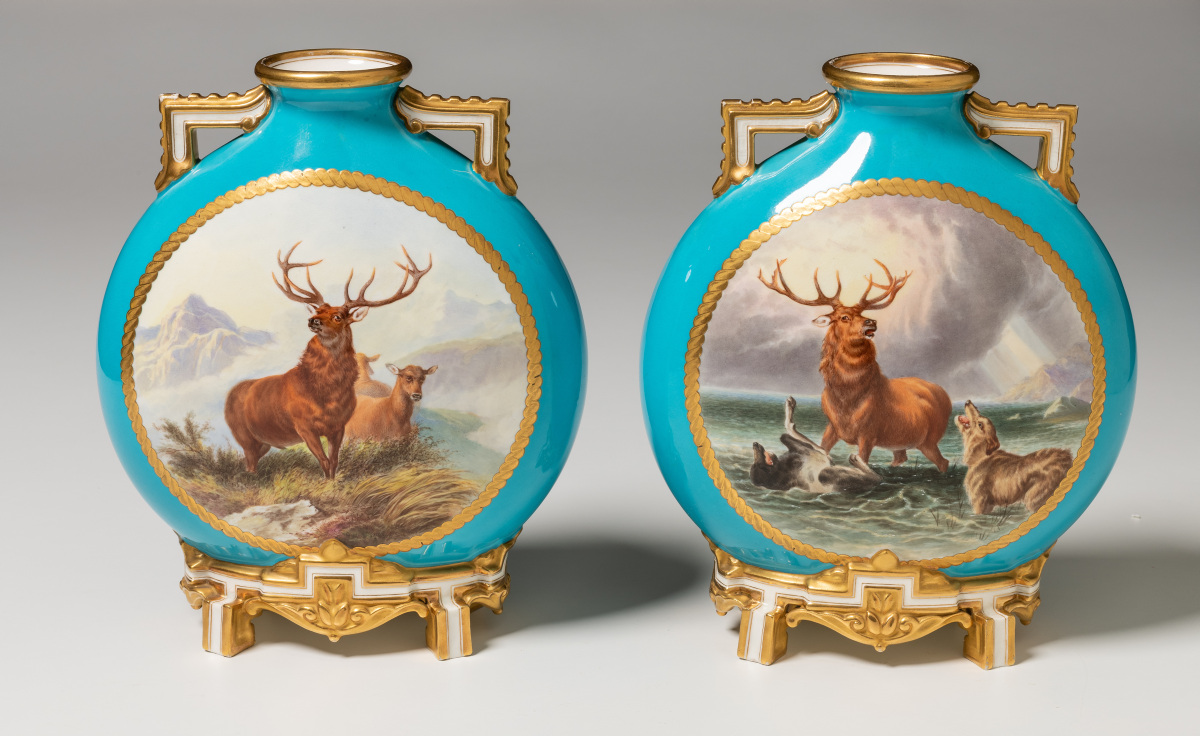
Ben Ronalds was a passionate collector of ceramic and glass for over 30 years. Over his lifetime, Ronalds acquired a world-standard collection of Royal Worcester and comparative pieces from other British, European and Asian ceramics and glassware manufacturers. His collection, considered one of the highlights of the Queensland Museum ceramics collection, was donated in his honour in 1976 by his family.
Benjamin Charles Ronalds (born 1892, died 1970) migrated to Australia in 1911 from the United Kingdom, having served an apprenticeship in the glass trade. In Brisbane, he worked with Oxlades glaziers before opening the Decorative Glass Company in West End in 1924. The company carried out glazing work but also stocked glassware and ceramics. Ben Ronalds started collecting ceramics and glassware around 1935, and by 1946 was specialising in collecting Royal Worcester porcelain. In the post-war years Ronalds won his first big glazing contracts – the M.L.C. Building at the corner of Adelaide and Edward Streets, Brisbane, and the South Brisbane Auxiliary Hospital (now the Princess Alexandra Hospital). His success in business allowed him to pursue his passion for collecting ceramics and glass.
Although having a particular interest in Royal Worcester porcelain, Ronalds also collected decorative ceramics from other renowned artists and manufacturers, such as Royal Doulton, Wedgewood, Meissen, Coalport, Lladro, and Royal Crown Derby. His collection features a range of glassware as well, showing the influence of his career on his collecting tastes. The ceramics in his collection range from figurines and ornaments to decorative homewares, including tableware and commemorative pieces. The range of styles include Satsuma from Japan, decorative features with interpretations of classical Grecian and Roman artists and sculptures, and art deco influences on domestic tableware.

Almost 800 pieces were donated by the Ronalds family, with the desire that the collection be “made available to the public for their study and enjoyment”. Visiting experts have been surprised at the quality and breadth of the collection in one man’s collection. Ben Ronalds, as a collector, amassed a collection that remains of local, state, national, and international significance for its breadth of representation of late 19th and early 20th century ceramics, particularly from the Royal Worcester Company. The collection is remarkable in its aesthetic value, and the opportunities it affords for interpretation of many facets of ceramic use and production. The Queensland Museum continues work to digitise this immense and important collection, to provide online access of the collection’s treasures to all.

Discover ceramics from the Ben Ronalds Collection in Fragile and Forever: Ceramics from the Queensland Museum Collection, a free exhibition now on at Queensland Museum Kurilpa: museum.qld.gov.au/kurilpa/whats-on/fragile-and-forever/

You must be logged in to post a comment.