

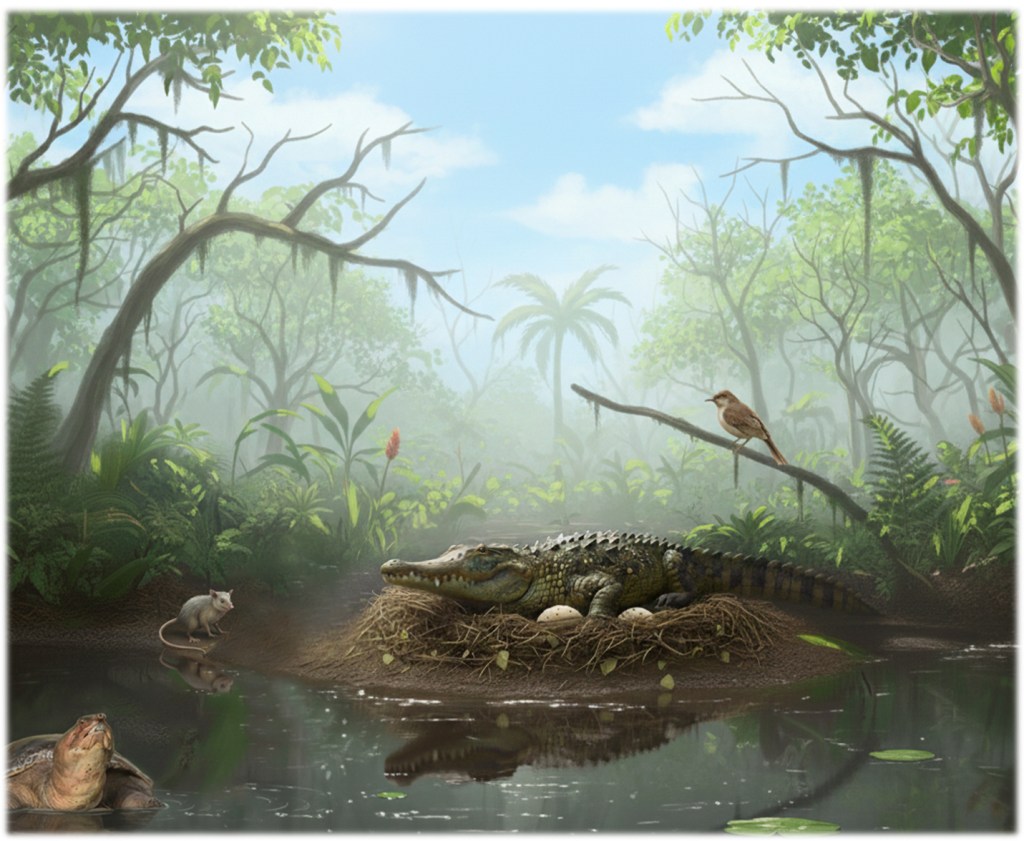
They might not look like much at first glance – just a few fragments of fossilised eggshell in slides. But these 55-million-year-old shell slivers from Murgon, on Wakka Wakka Country in southeast Queensland, are rewriting the story of crocodiles in Australia.

In a new study published in the Journal of Vertebrate Paleontology, researchers identified the oldest crocodilian eggshells ever found in the country. These delicate pieces belong to an extinct group of ancient crocodiles known as mekosuchines – a remarkable lineage that once ruled Australia’s waterways long before today’s saltwater and freshwater crocs arrived.

The eggshells, now part of Queensland Museum’s collection, have been named Wakkaoolithus godthelpi and are thought to come from the genus Kambara. While these early crocs likely preferred fish and turtles to terrestrial prey, later mekosuchines evolved into curious land and perhaps even tree-climbing species – the extinct Aussie “drop crocs” (although this idea is hotly debated!) – ambush artists of the ancient world that add to the story of Queensland’s prehistoric past.

For scientists, these tiny fragments are priceless. Under the microscope, the eggshells reveal intricate microstructures that help palaeontologists understand how ancient crocs lived, bred and adapted to their environment. They also show how much information can come from even the smallest fossils – the kind of finds that might fit in your palm but hold millions of years of history.
From bones to eggshells, every discovery adds another piece to the puzzle of Australia’s prehistoric past.

The preservation of ancient eggshell can tell us about the different ways crocs can build their nests – just like the one on display in Croc! Lost Giants to Living Legends.
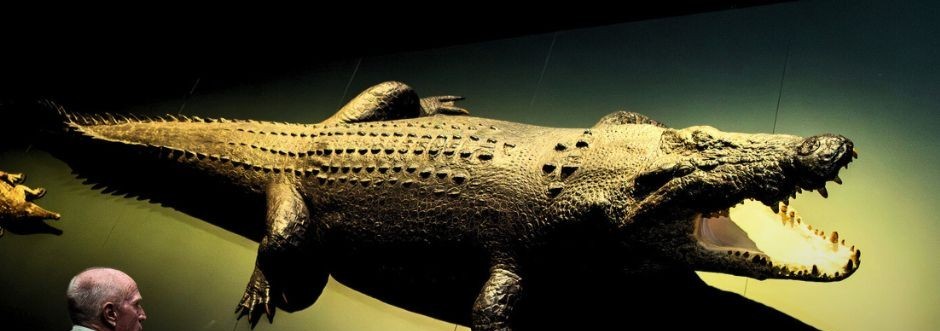
Want to see more croc content? 🐊 Visit Croc! Lost Giants to Living Legends at Queensland Museum and come face-to-face with Australia’s ancient apex predators.


 Queensland Museum Blog
You must be logged in to post a comment.