


By Rob Shiels, Curator, Transport, Queensland Museum Rail Workshops
The decision by Australian colonies to build different sized railway gauges in the nineteenth century has had a lasting impact on our transport networks that is still felt today. In Queensland, 3ft 6in narrow gauge was chosen as the mainline gauge to keep costs down, while in New South Wales, 4ft 8 ½in gauge (considered ‘standard gauge’ through most of the world) was chosen.
While the size difference posed little issue when railways were built within Queensland and New South Wales separately, big problems eventuated when lines needed to meet. Queensland opened its first railway in 1865, but a line to the southern border with New South Wales was not completed until decades later.
In the mid-1880s, the Queensland government gave approval for a railway to be constructed to New South Wales. The New South Wales government suggested a 3ft 6in gauge line be built to Tenterfield where passengers could then transfer between trains. Not happy at spending money within New South Wales, Queensland rejected this idea and insisted on a border station. Wallangarra station was created for this exact purpose; the station was exactly on the Queensland – New South Wales border: one side of the platform had 3ft 6in gauge line, while the other had 4ft 8 ½in line. Interstate services began in 1888.
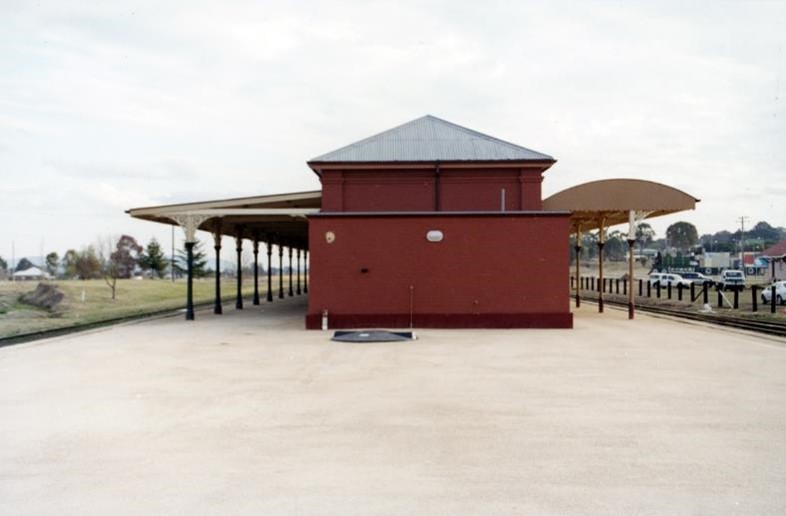
Far from being a direct journey, the route ran from Brisbane through to Toowoomba and then Warwick, before terminating on the border. Passengers for New South Wales travelled on the Sydney Mail, a passenger train that included a traveling post office. After reaching Wallangarra, passengers changed to New South Wales services and continued on their way. The total time of the journey from Brisbane to Sydney was 36 hours.

Although the capital cities were connected, a more direct route for passengers, goods and defence was desired. In the early twentieth century, Australia was criticised for its patchwork, non-existent interstate railway system, most notably by Lord Kitchener on his visit in 1909 to assess Australia’s defensive capabilities. After the First World War, connecting the mainland capitals by a uniform line was seen as a priority – even if it would take decades to achieve.
In 1921, the Royal Commission into Australia’s Standard Gauge Railway recommended a line be constructed from Kyogle to South Brisbane. With Commonwealth financial support, Queensland and New South Wales agreed on the route (the building of a bridge over the Clarence River at Grafton was insisted upon by NSW as part of their agreeing to the plan). With the agreement of the three governments, work began in 1925.
A turning of the sod ceremony for the Queensland section was conducted in Rocklea on 17 January 1925, while New South Wales held a ceremony in Kyogle on 23 June 1926 to commemorate the start of construction for their section.

Queensland’s section, known as the Uniform Gauge Railway, is 111km long and includes three tunnels. After crossing the border from New South Wales, which occurs inside a tunnel, the line extends north near Rathdowney, then continues west of Beaudesert before entering Logan and then proceeding through the south side of Brisbane.
In 1925, South Brisbane was chosen as the terminus station as it was centrally located. Without a railway link between the north and south sides of the Brisbane River (that wouldn’t eventuate until the Merivale Bridge was opened in 1978), the line had to finish on Brisbane’s south side.
Land beside South Brisbane suburban station, known as Melbourne Street station from 1884 – 1891, was used to build a goods yard and a station for interstate travellers.

Opened on 27 September 1930, the Uniform Gauge Railway, for the first time in Australia, directly linked two capital cities, with the new service taking 22 hours between Brisbane and Sydney. The direct line was a welcome upgrade for travellers and businesses, which could now send goods between the states more quickly. For Queensland Railways however, the line was a mixed blessing.

As Queensland Railways operated 3ft 6in rolling stock, it made little sense for Queensland to invest in standard gauge stock for such a short section of track. This meant that all trains that operated on the line would be made up of New South Wales Government Railways (NSWGR) stock. Although Queensland Railways provided some employees to work on the trains, New South Wales earned a significantly larger share of freight revenue on the line than Queensland did. Queensland Railways also had to continue operating trains to Wallangarra while also investing heavily in new facilities for the Uniform Gauge Railway.
Queensland built a new goods yard at South Brisbane, along with a larger yard at Clapham (present day Moorooka) to accommodate freight from the line. The interstate station was also an expense the railways had to bear.
As the only passenger station with standard gauge track in Queensland, South Brisbane Interstate was a unique station. Completed in 1930, the interstate station faced Merivale Street, while the suburban South Brisbane station faced Grey Street. As the interstate was a terminal station, the tracks finished on Melbourne Street, with the tracks elevated above road level.

level on Merivale Street. QR/QM Collection
Another unique aspect of the interstate station was its two-level design. The upper level was the platform, and a ramp was constructed so vehicles could drop off people at the main platform entry, while deliveries, goods and baggage could be collected from the offices on the lower, road level. There were staircases and lifts between the two levels. A refreshment room on the platform provided passengers with meals before their long journeys south.
Although hardly at Kuranda level, South Brisbane Interstate was noted for its greenery and platform pot plants, but by the 1980s, some passengers believed the plants were used to hide some of the ageing station’s flaws.

Flaws aside, the station was the home of the daily Brisbane Limited service, one of the NSWGR’s premier trains. Until 1972, a second daily service, the Brisbane Express also operated. (The Brisbane Limited was the ‘express’ service, while the Brisbane Express was the slower service – got to hand it to those southerners, they sure know how to confuse us simple Queenslanders!)

The Brisbane Limited operated on the Uniform Gauge Railway from 1930 to 1990. The line was of particular importance during the Second World War, carrying troops north from Victoria and New South Wales to South Brisbane Interstate station. After leaving the interstate station, thousands of soldiers would board trains leaving South Brisbane suburban station, head south again, then cross on the Tennyson loop connecting onto the Ipswich Line to reach Roma Street station. From Roma Street, the trains would begin the enormous journey to North Queensland.
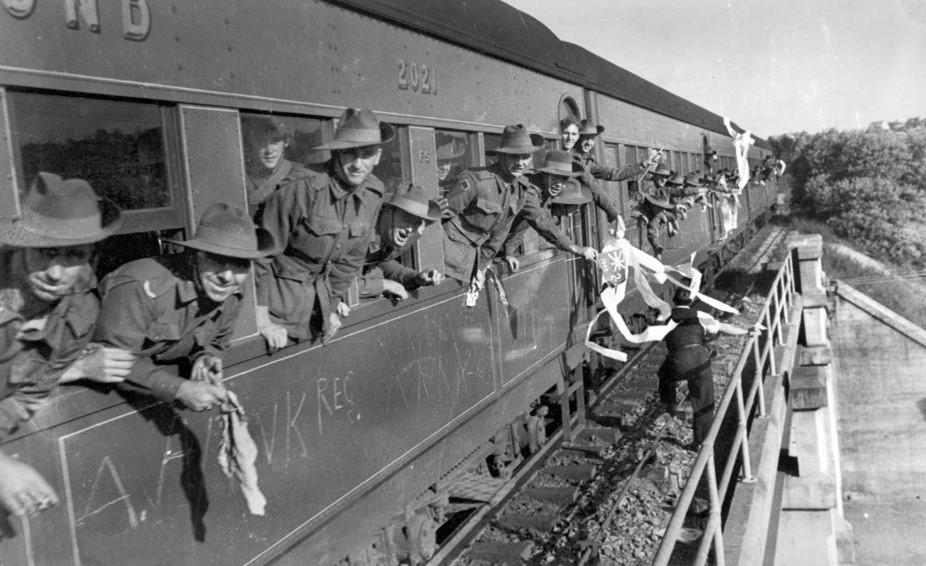
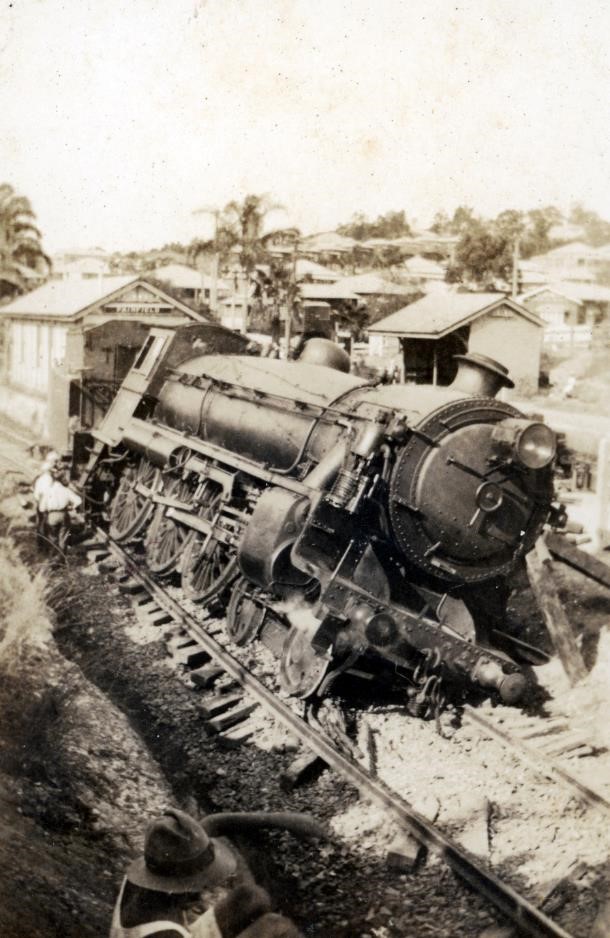
During the 1930s and 1940s, the Brisbane Limited was hauled by steam locomotives which were much larger than the typical steam engines seen in Queensland. NSWGR locomotives like the C36 class (known as ‘Pigs’) regularly worked the trains in the early years and by the end of the 1940s, the famous C38 class locomotives began hauling the train. It became a common sight to see Queensland and New South Wales locomotives running side by side through Brisbane’s southern suburbs including Salisbury, Yeerongpilly, Yeronga, and Fairfield. You could imagine that a collegial, ‘brothers united in a common cause’ mentality was likely to have arisen between the two sets of workers. New South Wales locomotive cleaner K. Groves had this to say on the matter:
‘Coming north of the Border through Yeronga station where the standard and narrow gauge tracks are closely parallel we would with our 5’ 9” driving wheels rapidly overhaul the south side suburbans and from our lofty perch on the fireman’s side of the ‘Pig’ look down on the Queensland crews with a certain amount of disdain.’
Mr Groves elaborated further about his experiences of working in Brisbane and his admiration for Queensland’s trains:
At South Brisbane Interstate Station I have countless times sat on the 19 class shunter and watched the PB15’s hauling the wooden stock suburban trains out of the old narrow gauge station. Those Walkers and Ipswich built ten-wheelers looked so puny beside our 35 and 36 classes. They were also the days when a number of our mainline locomotives were painted green which, against the smudgy black of the narrow gauge engines, accentuated our superiority.’
For Queensland based trainspotters who could look past the inadequacies of their own state’s miniature system, the Uniform Gauge Railway also provided the opportunity to see rolling stock from a magical far away land where everything was said to be perfect, and the rails were made of gold.
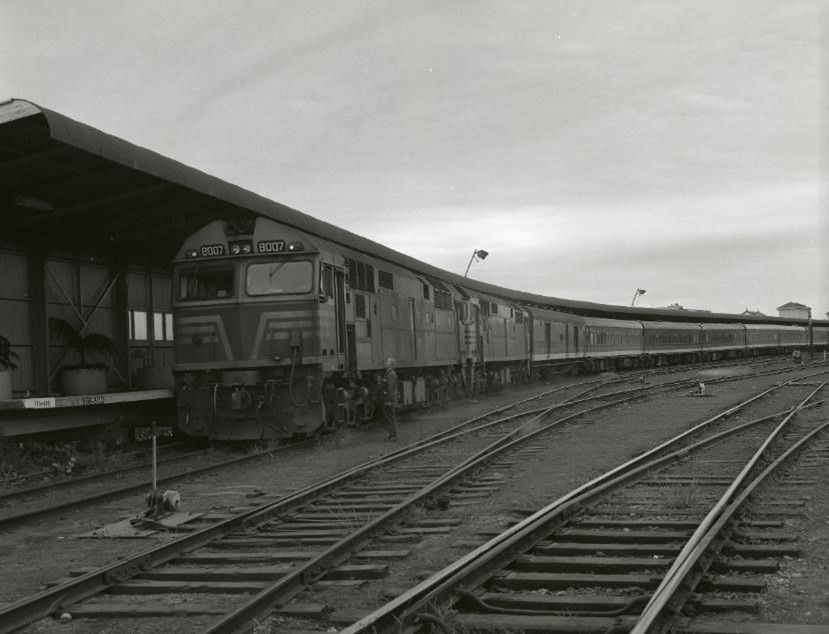
NSWGR 40 class diesels began hauling the Brisbane Limited in 1952 and until it’s closure in 1986, South Brisbane Interstate station was a great place to view and photograph exotic locomotives and carriages. In 1960, stainless steel cars replaced the old wooden carriages and remained in service until the Brisbane Limited ceased running in 1990.

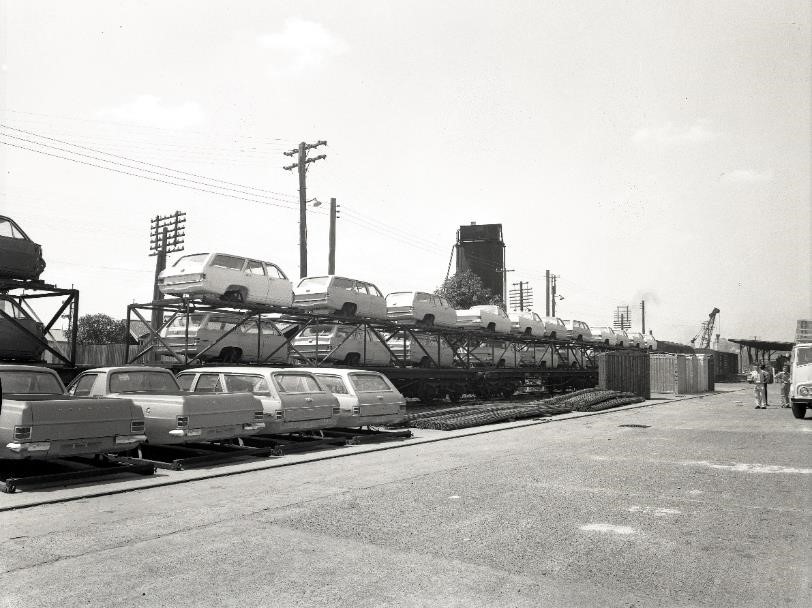
South Brisbane Interstate was also an important freight depot, and a goods yard was built next to the passenger station in 1930. Goods trains from New South Wales arrived with full wagons and often left with Queensland grain and fruit for sale down south. Wooden platforms were built beside some of the tracks in the goods yard to quickly unload the trains. Cranes were used for larger loads, which even included Holden car bodies during the 1960s. Unable to be stored anywhere on the QR network, NSWGR locomotives were stored at a small depot in Yeerongpilly, a few kilometres from South Brisbane.

In 1978, the two sides of Brisbane’s suburban network were finally connected when the Merivale Bridge was opened. Following the announcement of Expo 88 in late 1983 and subsequent redevelopment plans, the interstate station was moved to Roma Street and all goods work was transferred to Acacia Ridge and Clapham. The station site became World Expo Park in 1988. After the park’s closure in 1989, the Brisbane Convention and Exhibition Centre was built on the old interstate station site, opening in 1995.
Moving the interstate station required the building of 2.6km of new track between South Brisbane and Roma Street via the Merivale Bridge. In the 1980s, Roma Street underwent major redevelopment which included the building of the Brisbane Transit Centre and high-rise buildings at the station. With interstate trains now arriving at Roma Street, it made coordinated journeys easier, and the station became the central hub in Brisbane for all long-distance train and bus services.
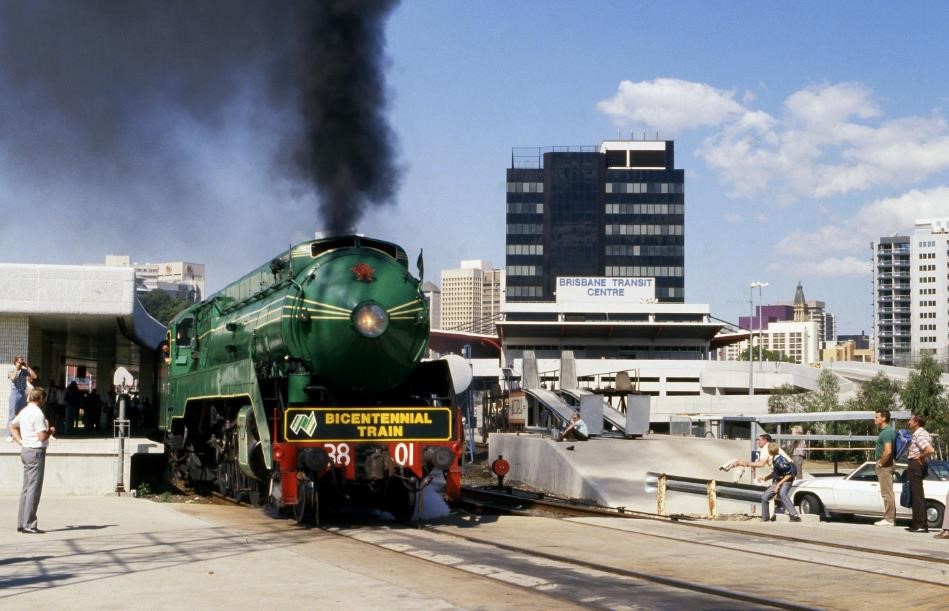
Roma Street station was the scene of a very special day for Queensland trainspotters when it hosted a visit from Australia’s most famous steam locomotive, NSWGR 3801 as part of Bicentenary celebrations in September 1988. In 1989, the station hosted a once-in-lifetime, probably never to be repeated event when the world’s most famous locomotive, LNER 4472 ‘Flying Scotsman’ visited and took passengers to Kyogle along the Uniform Gauge Railway.
After sixty years of service, the Brisbane Limited ran for the last time in 1990. It was replaced by the XPT which is still running in 2024. The XPT will be replaced post-2025 when New South Wales begin rolling out their new Regional Rail Fleet Bi-Mode Diesel-Electric Hybrid trains.
During the twentieth century, direct interstate railway services provided a vital link between Queensland and New South Wales, and for 56 years, the South Brisbane Interstate station was the hub of this activity in Queensland. With the rise of aviation travel, personal vehicle ownership and investment in national highways, interstate railway travel has seen a steady decline in patronage. The Uniform Gauge Railway still plays an important part in connecting northern New South Wales with southeast Queensland however, and for people who enjoy long-distance train travel, the line offers the opportunity to experience the Cougal Spiral, one of Australia’s most innovative railway engineering feats of the last century.
Although the majority of travellers may now prefer aviation travel, the idea of a connected Australia with standard gauge railway line is a concept that continues to be embraced. Most notably the ambitious Inland Rail project that will connect Melbourne to Brisbane through regional areas, will refocus the moving of freight between eastern states from road transport back to rail. But the days of high patronage long-distance railway travel appears to be over in Australia, unless a high-speed rail solution can be found. Perhaps Queensland’s Tilt Train can be an inspiration to other states looking to invest in high-speed trains, after all, we’ve had them for over 25 years and they still hold Australia’s fastest ever train speed record. Food for thought New Slow Wales.
References:
Triumph of Narrow Gauge: A History of Queensland Railways – John Kerr (Boolarong Press, 1998)
Kyogle – Brisbane Golden Jubilee 1930-1980 – Bruce Wilson (Northern Star Print, 1980)
Railway Stations in Queensland Part 5 – Greg Cash, Sunshine Express March-April 2024
Steam working north of the border – K.T Groves, ARHS Bulletin August 1985
The last years of the Brisbane Limited and Brisbane Express – Rod Milne, ARHS Bulletin February 1998
All Aboard for Sydney – Des Partridge, ARHS Bulletin November 1998
The Final Link – Queensland Railways 1986




 Queensland Museum Blog
You must be logged in to post a comment.