

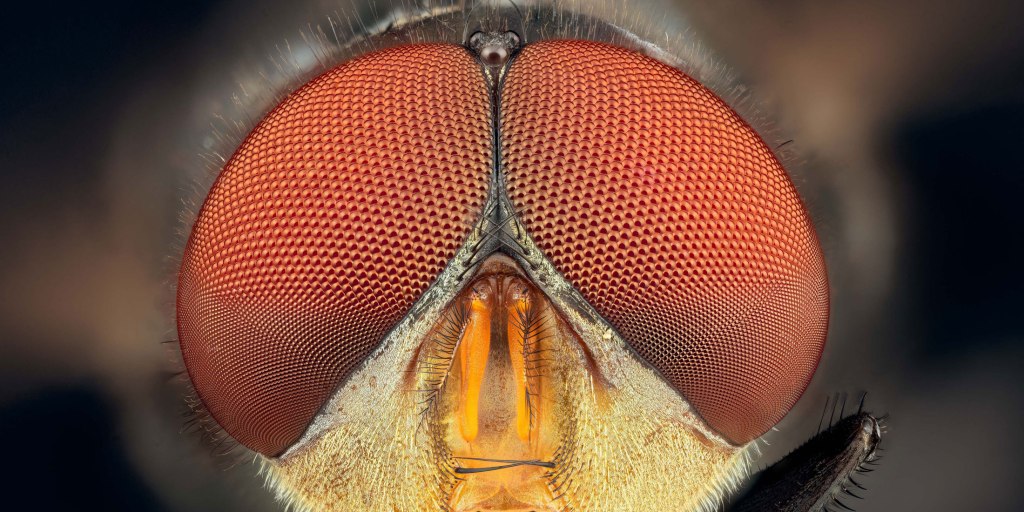
Written by Geoff Thompson, Collection Imager, Queensland Museum
For such small creatures, capturing an insect’s close-up is a big job. When that close-up is to be displayed on the side of a building – at roughly the height of a bus – it’s an even bigger job!
This was the certainly the case when I was tasked with creating an image to feature in a new building banner at Queensland Museum Kurilpa. The process involved selecting several candidate species, obtaining fresh specimens, capturing hundreds of source photos, and meticulously applying focus-stacking and extensive editing over many hours.
Scouting for a model
When I received the brief for a striking new image, the red-eyed blowflies that commonly perch on twigs and clotheslines came to mind.
In the morning before work, my wife and I headed to our garden to collect fresh specimens. With the autumn temperatures dropping, we only found one specimen, which I netted and collected into a dry tube. We collected a few other insects, but the fly was the one I hoped would be the star.
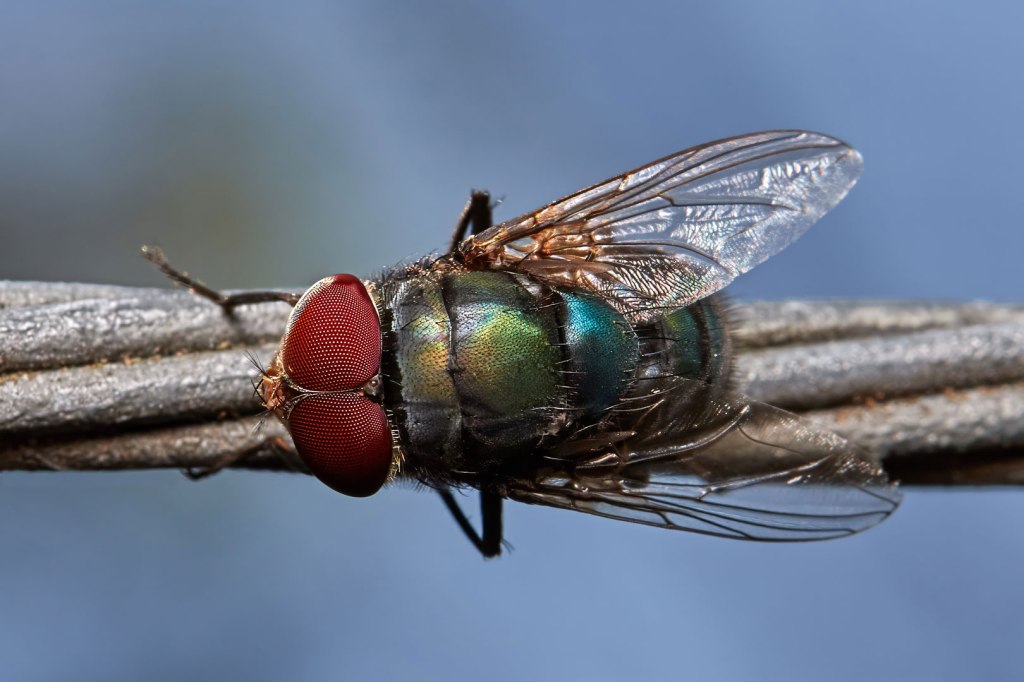
My colleague Lily Kumpe and I photographed multiple specimens for this project, two freshly caught and three from the collection. Of the five images created, the winning shot was a male Oriental Latrine Fly, Chrysomya megacephala.
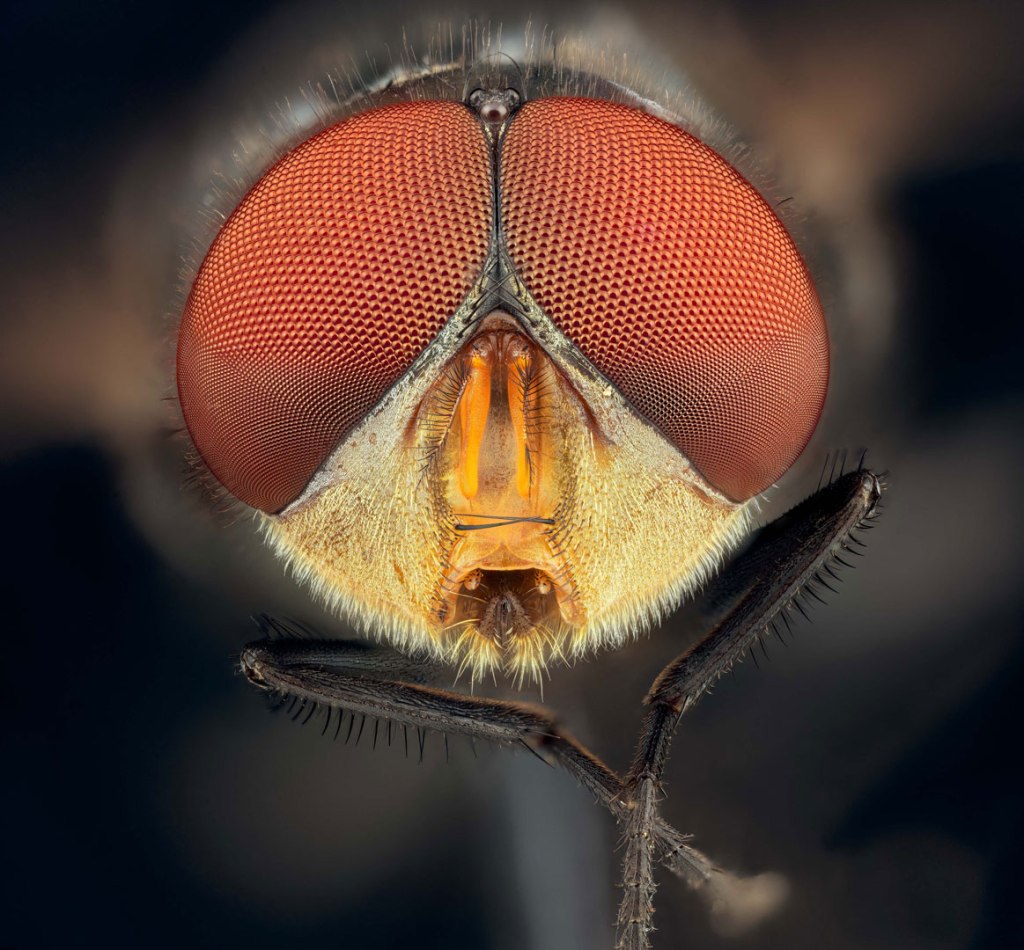
When photographing insects for specific projects, I try to gather fresh specimens and keep them refrigerated until they’re ready for photographing. Most colours in dried museum insect specimens preserve well, but their eyes generally fade to a dull brown over time.
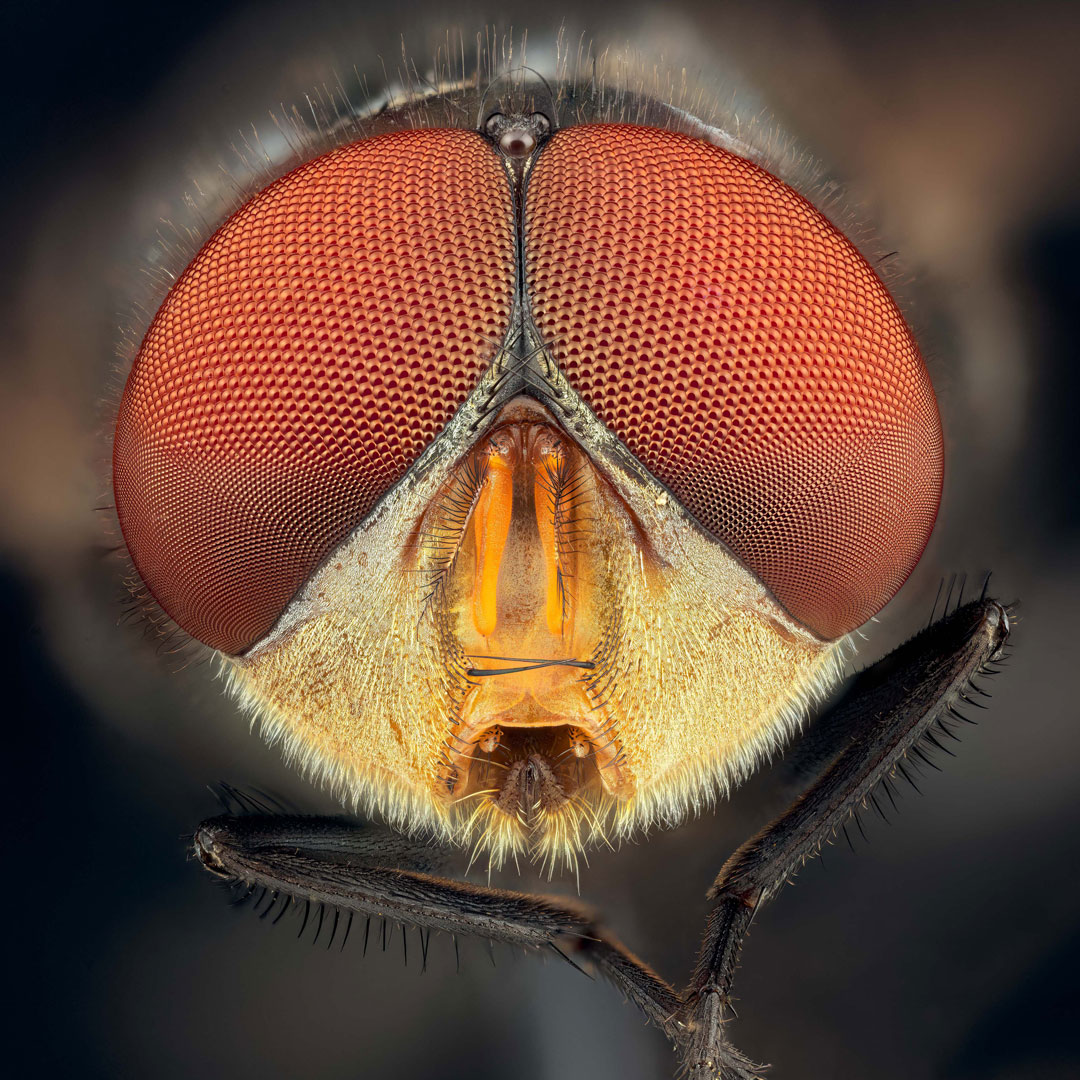
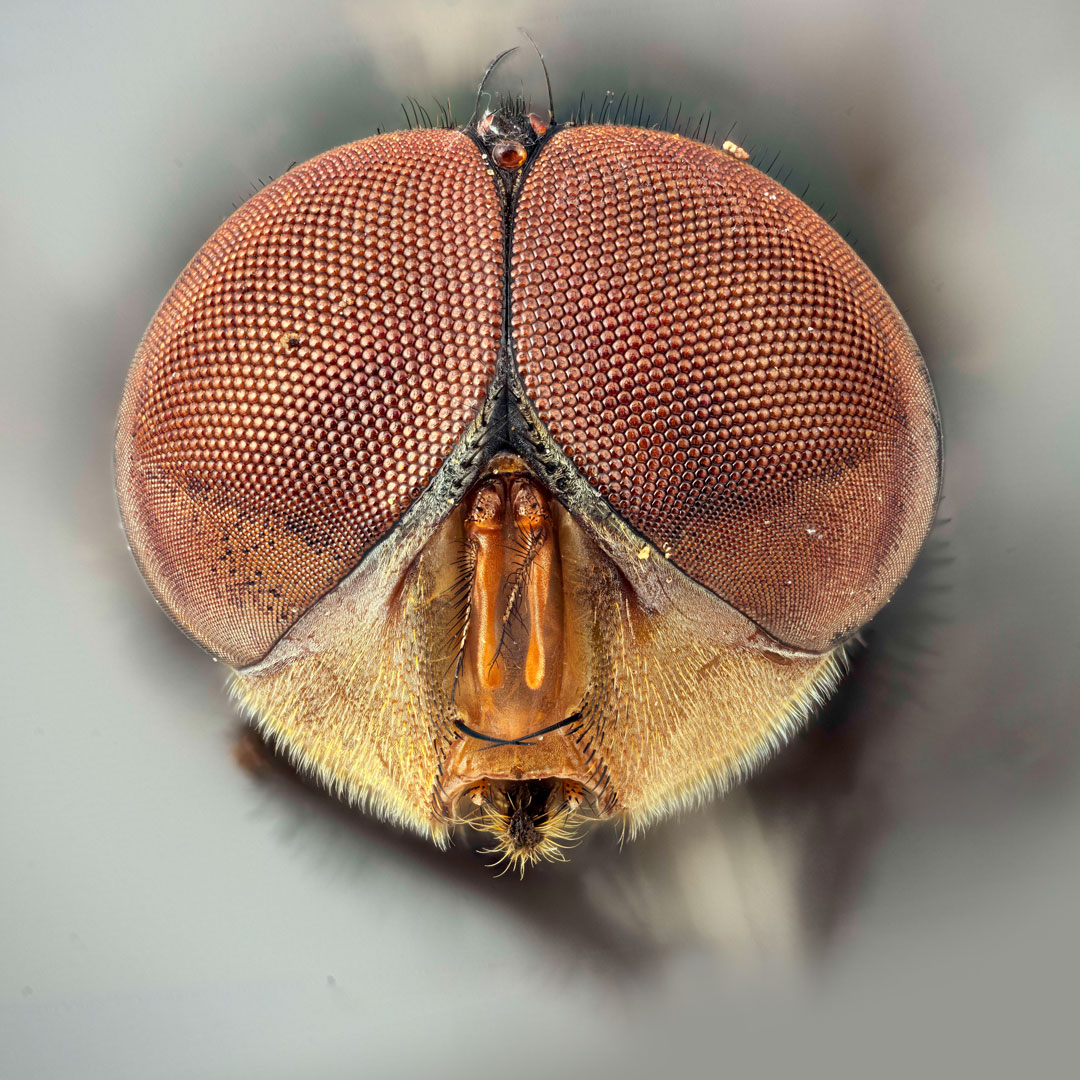
Even when preserved correctly, the vivid colours in insect eyes generally fade to brown over time. These images of the same specimen show the change in eye colour from when it was first photographed and one month later. Photographer: Geoff Thompson
The process
To take a highly magnified photograph of an insect face requires hundreds of source images. They are taken at equal intervals from top to bottom of focus, with overlapping focal depth between each photograph and the next.
Software combines all the sharply focussed portions into one sharp photograph. When a sharply focussed structure obscures another, artifacts can occur.
We then choose images with the foreground structure is in focus, but the background blurred, and do a sub-stack. The resulting sharp foreground image is then brushed in by hand with a digital brush.
Selection and editing
The five images created required camera and flashes to fire a total of 1,661 times, sub-stacking, merging, sharpening, adjustment, and digital dust removal. This process takes about a day to complete, per image.
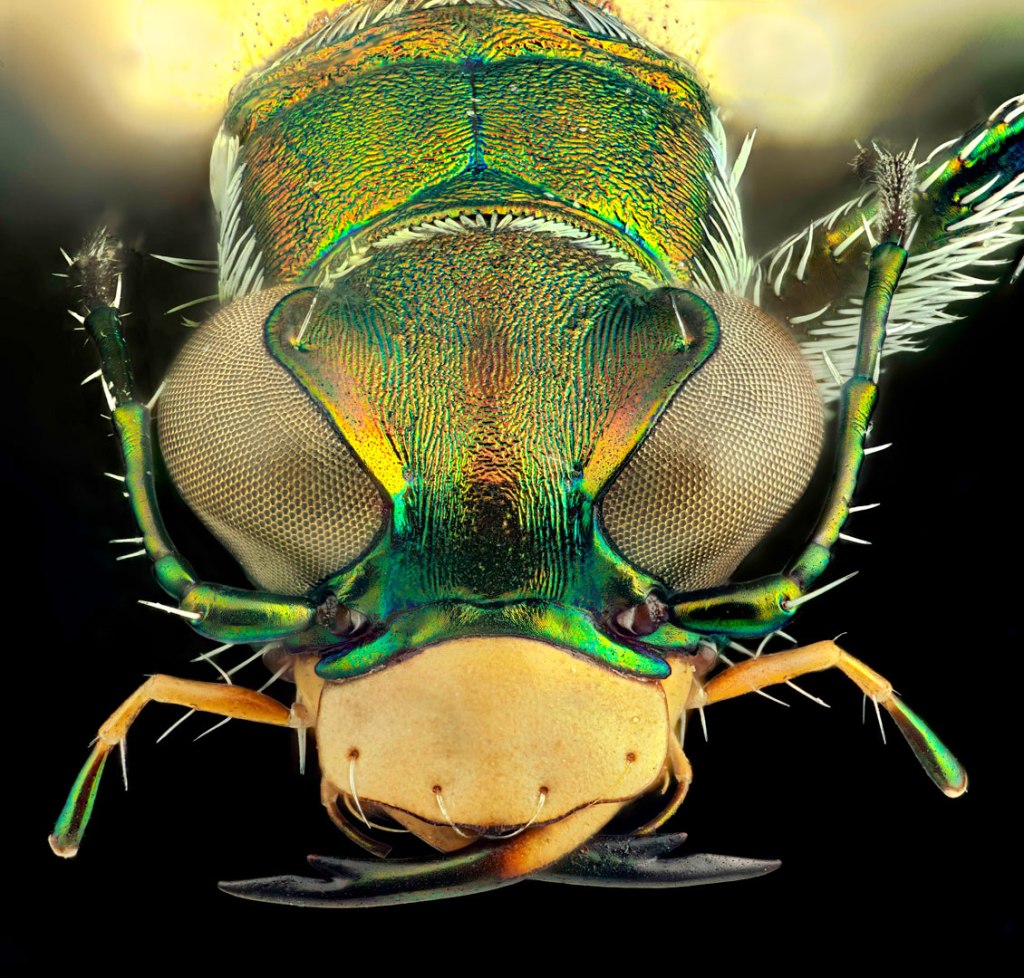
The fly required two sets of source images (one of 146 and another of 150). After focus stacking, I merged the two stacked overlapping images with Affinity Photo.
Once the final image was chosen, an additional three hours were spent digitally removing spider webs from the fly’s large compound eyes and the three simple eyes (ocelli) at the top of the head (it’s amazing what you can see when you look this close!).
The final design
Once perfected, the fly stole the spotlight in our final banner image with its vivid red eyes and intricate details. The time, effort and passion in capturing and editing the images resulted in a spectacular image to showcase the wonders of insect life in stunning detail.
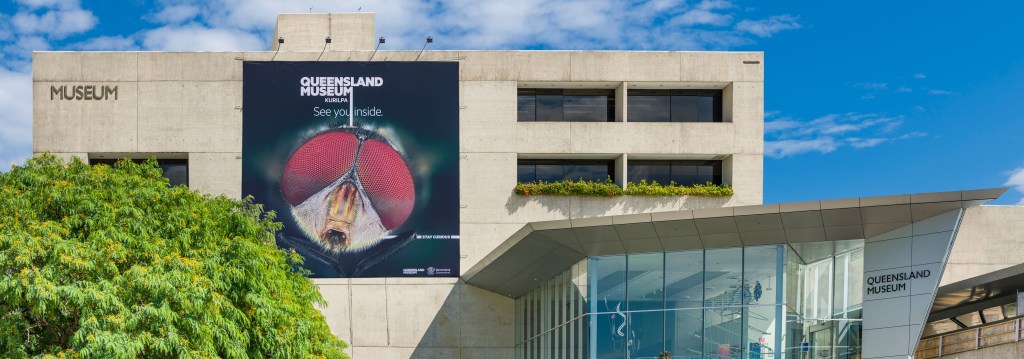
See Geoff’s stunning work displayed now on the Melbourne Street side of Queensland Museum Kurilpa. Plan your next visit to the museum now.

 Queensland Museum Blog
You must be logged in to post a comment.