
By Rob Shiels, Collection Manager – Transport, Cultures and Histories
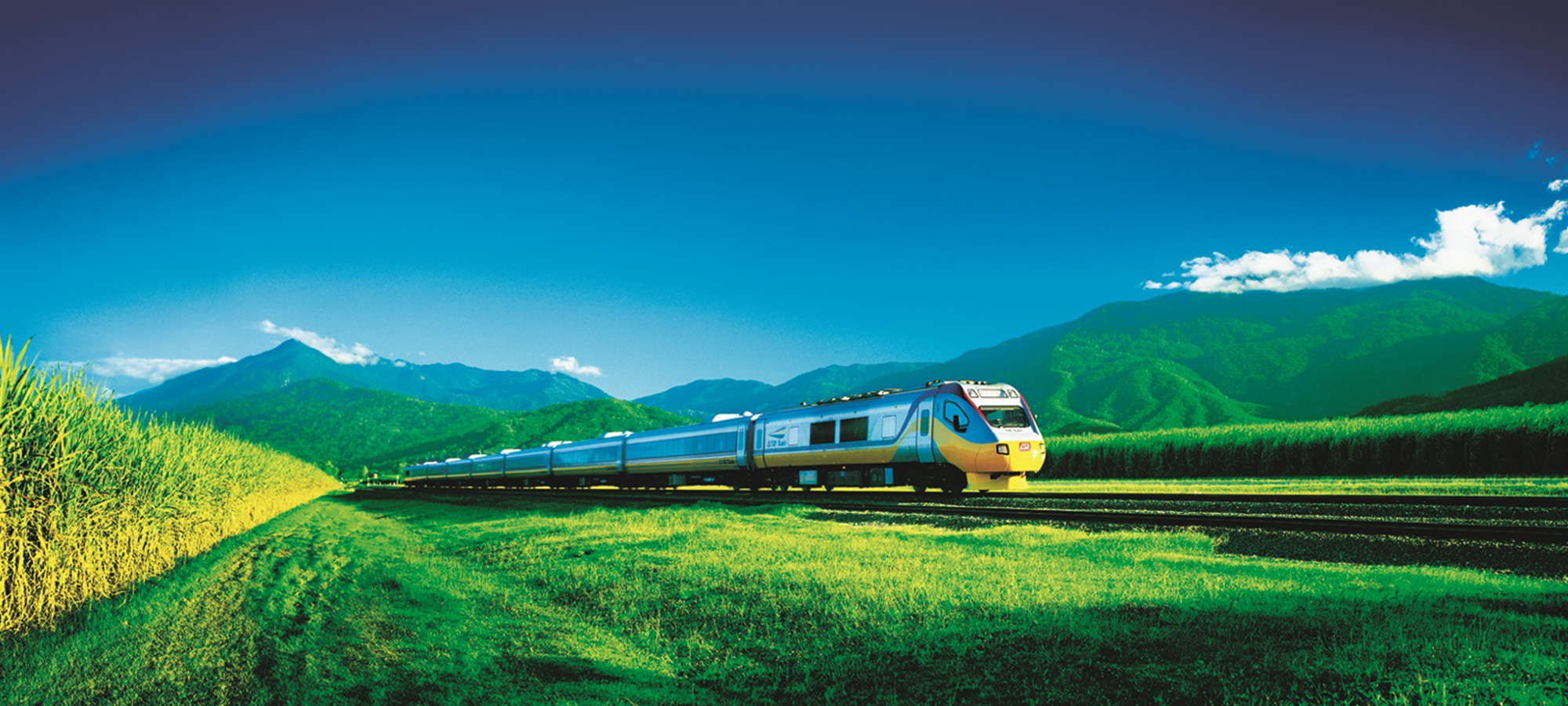
In 2023, Queensland Rail’s Tilt Train turns 25. Although unlikely to be spoken about alongside the world’s fastest trains like Japan’s famous Shinkansen or France’s TGV services, the Tilt Train holds the record for the fastest train speed ever recorded in Australia at 210km/h (the train’s top speed during regular service is 160km/h).
In the early 1990s, Queensland Rail decided that new trains were needed on the Brisbane to Rockhampton route. Although existing trains such as the iconic Sunlander and Spirit of Capricorn serviceswould keep running alongside the new services for several years, the coming of the 21st century would usher in a new era of train travel in Queensland. The Tilt Train was the future.

Although it was new technology for Queensland, tilting trains had been used for decades in other parts of the world. The design allows trains to run at higher speeds by ‘leaning’ or ‘tilting’ into the centre of curves without having to slow down, providing a unique riding experience for passengers.
In 1994, Walkers of Maryborough began building two electric six car tilt train sets. Testing began in 1997 and after 12 months of test runs, the Tilt Train was ready for service in November 1998.
With the new trains completed (named City of Rockhampton and City of Maryborough), daily services commenced between Brisbane and Rockhampton and, thanks to the new design technology, the Tilt Train was over two hours quicker than the older Spirit of Capricorn service – taking seven hours instead of over nine (the Spirit of Capricorn service ceased operation in 2003).


Without a fully electrified railway line between Brisbane and Cairns, a new type of train had to be designed to run a faster speed service into North Queensland. In 1999, Walkers began working on two diesel fuelled tilt trains that would operate between Brisbane and Cairns. Named City of Cairns and City of Townsville, the two new diesels began service in 2003.
A serious accident involving a Tilt Train in 2004 near Berajondo led to the train’s speed limit being reduced for three years until safety upgrades were completed and the speed increased again in 2007.

Despite the setback, diesel Tilt Trains were here to stay, and they changed the way people travelled by long-distance train to Cairns. Shaving six hours off the journey, compared to the Sunlander service, the Tilt Train took about 24 hours to arrive in Cairns compared to 30 hours. However, this extra speed came at a price – unlike the Sunlander, the Tilt Trains did not have private sleeping cabins, utilising airline type seating configurations instead.
In 2010, it was announced by the Queensland Government that another diesel train would be built, and the two existing trains were overhauled by Downer Rail (formerly Walkers) in Maryborough. The three trains, known as the Spirit of Queensland service, would allow for a five days per week service, with the new train entering service in 2013. At the end of 2014, the Sunlander completed its last journey with the Tilt Trains taking over all Brisbane to Cairns services from 2015 onwards.

Without sleeping compartments, the Spirit of Queensland service is in direct competition with air travel. However, one of the most important aspects of long-distance trains are their ability to service regional centres. Tilt Trains to both Cairns and Rockhampton continue play an important role in helping people move between the widely dispersed population centres of Queensland. Twenty-five years since they were first introduced, Tilt Trains and their ‘high speeds’ continue to be enjoyed by travellers and tourists who prefer to experience travel at a more leisurely pace.




You must be logged in to post a comment.