

Words and photographs by Karen Kindt, Collection Manager, First Nations Cultures
Nothing sounds sweeter than hearing a musical instrument come to life after sitting quietly unplayed for more than 60 years. Recently, we were afforded that experience, when an American zither held in the museum’s Charles & Kati Marson musical instrument collection was profiled in an ABC Radio Brisbane Mornings program, hosted by Rebecca Levingston.

Made by the Zither Manufacturing Company, Boston Massachusetts in the early 20th Century, the zither was originally owned by R B Simpson who lived in Westmount, Montreal, Quebec in Canada, before it was purchased at Fraser-Pinneys Auctions in 1992, by Charles Marson for the sum of CAN$25.00.
What is surprising, is the zither was accompanied by a personal letter penned by R B Simpson in 1962 and marked ‘Return to Sender’, addressed to the Zither Manufacturing Company, asking for advice on where they could acquire new wire strings for “a very old American zither”, as it was missing six wires and could not be played in its current state.
Along with the letter, was an incomplete Music for the American Zither booklet, produced by the Zither Manufacturing Company, containing 43 of the original 100 tunes, in the booklet. Listed tunes included waltzes, opera selections and popular melodies and the booklet stated, “extra wires sent by mail for 10 cents each”.
Collaborating with Queensland Conservatorium
In preparation ahead for the ABC Radio interview, we invited Alexandra (Lexi) Gorton, PhD Candidate from Queensland Conservatorium, Griffith University, to collaborate. After perusing the collections, Lexi chose to play a zither, from the 830 musical instruments held in the Marson collection. Trained in the Kantele, a traditional Finnish and Karelian plucked stringed instrument of the psaltery family, the USA manufactured zither, piqued her attention, and complemented her skill set.
New Discoveries
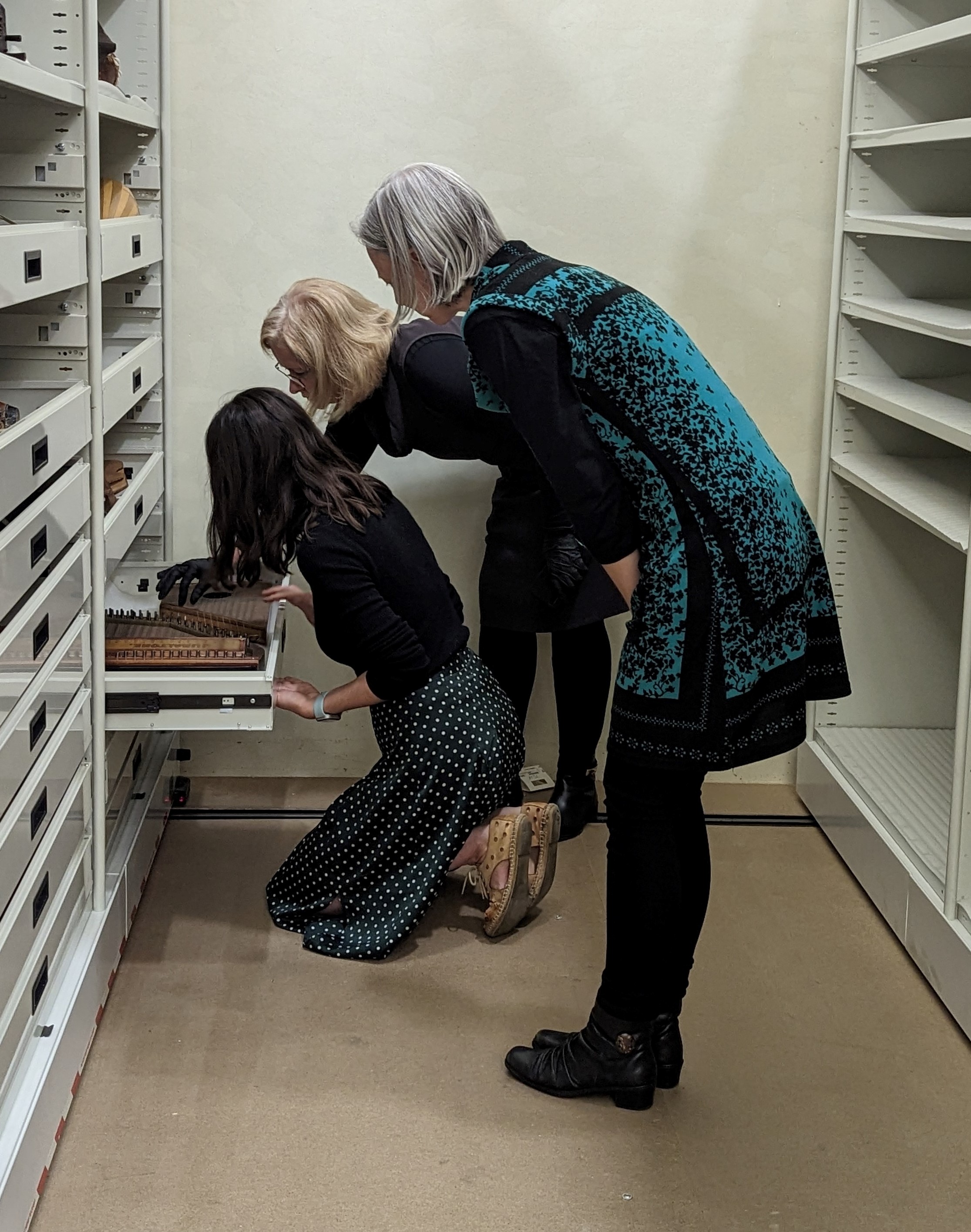
Transferring the zither from the collection store to the laboratory, we noticed the accompanied items (personal letter and booklet) and six wire strings missing on the zither.

Wired to Work
Not to be deterred, Lexi returned to the museum several days later armed with her mobile phone tuning App, tuning key, and several reels of wire of varying gauge.

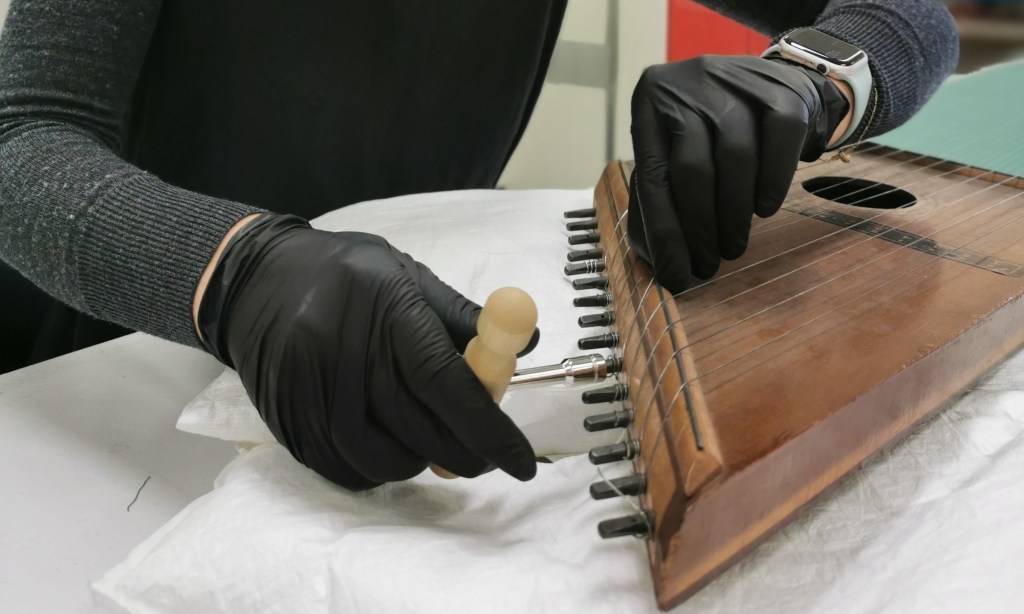
In the museum conservation laboratory, she very carefully set about tuning the existing zither wire strings, which had over the decades, embedded in the curve of the timber bridge and were clamped tight by the wood. Their current condition prevented the wire strings from being moved and tuned.
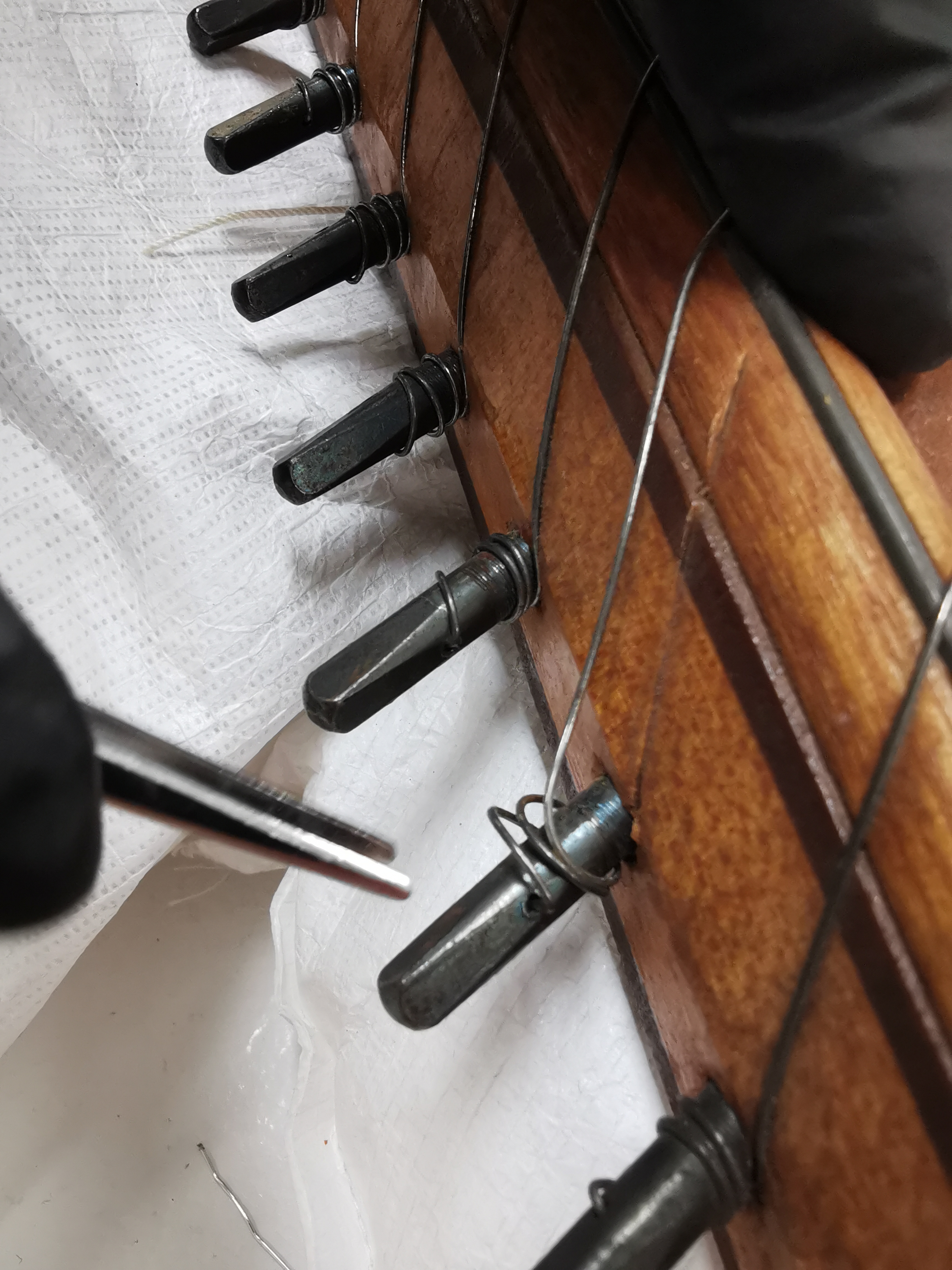
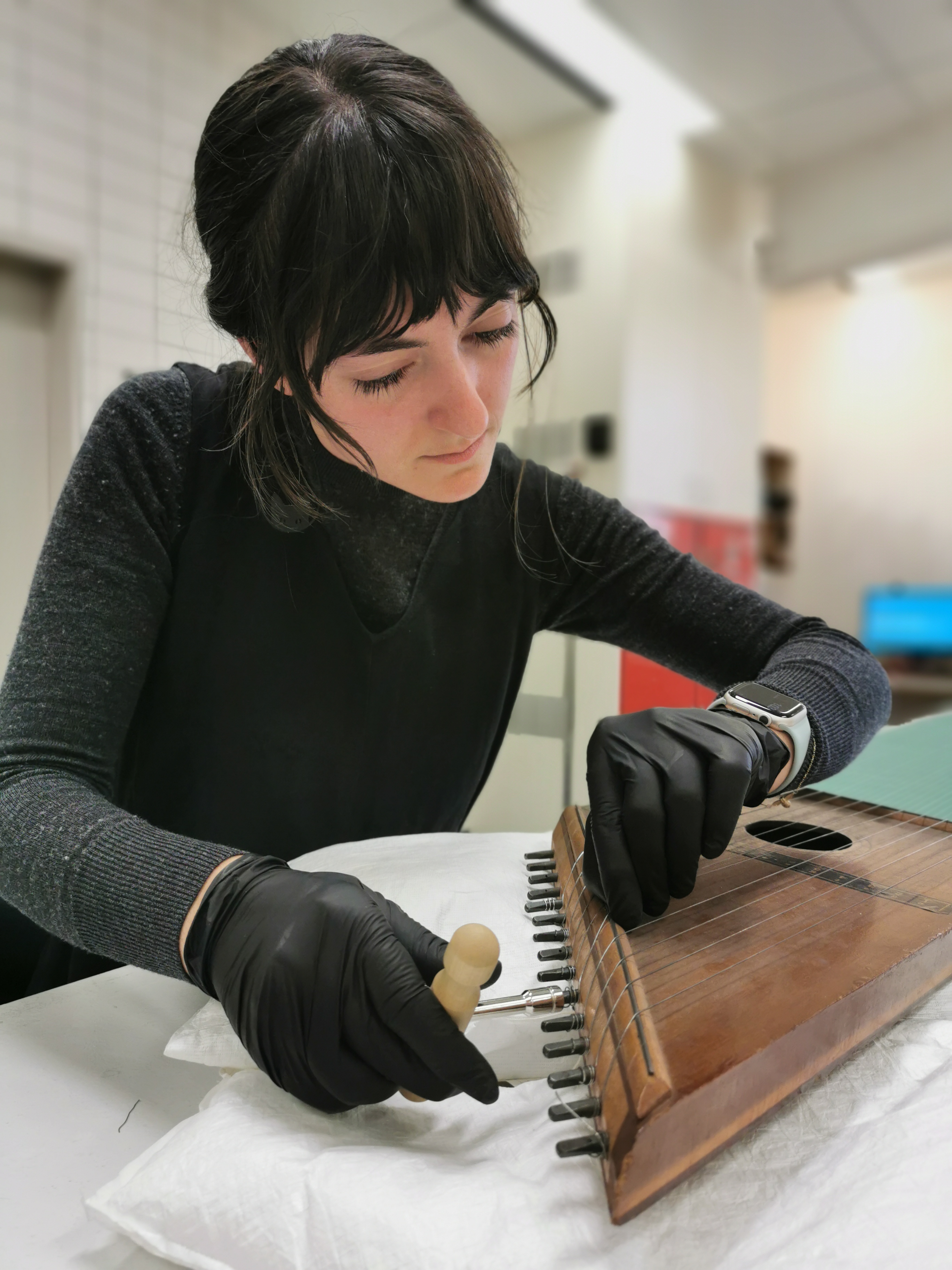
With much skill and gentle encouragement, the wires were loosened from their timber grip and carefully re-tightened. With great dexterity, five new wire strings were added, attaching, and winding them around the zither pegs.
Lexi then used her mobile phone App to tune the zither to a playable standard. To say we were chuffed is an understatement!
The satisfaction of re-instating the zither to a playable state, truly lifted our spirits, as Lexi played No 14. Auld Lang Syne, tune listed in the music booklet.
Listen and watch, as technologies from the 20th and 21st Centuries combine to bring the musical instrument back to life after sitting dormant for more than 60 years.
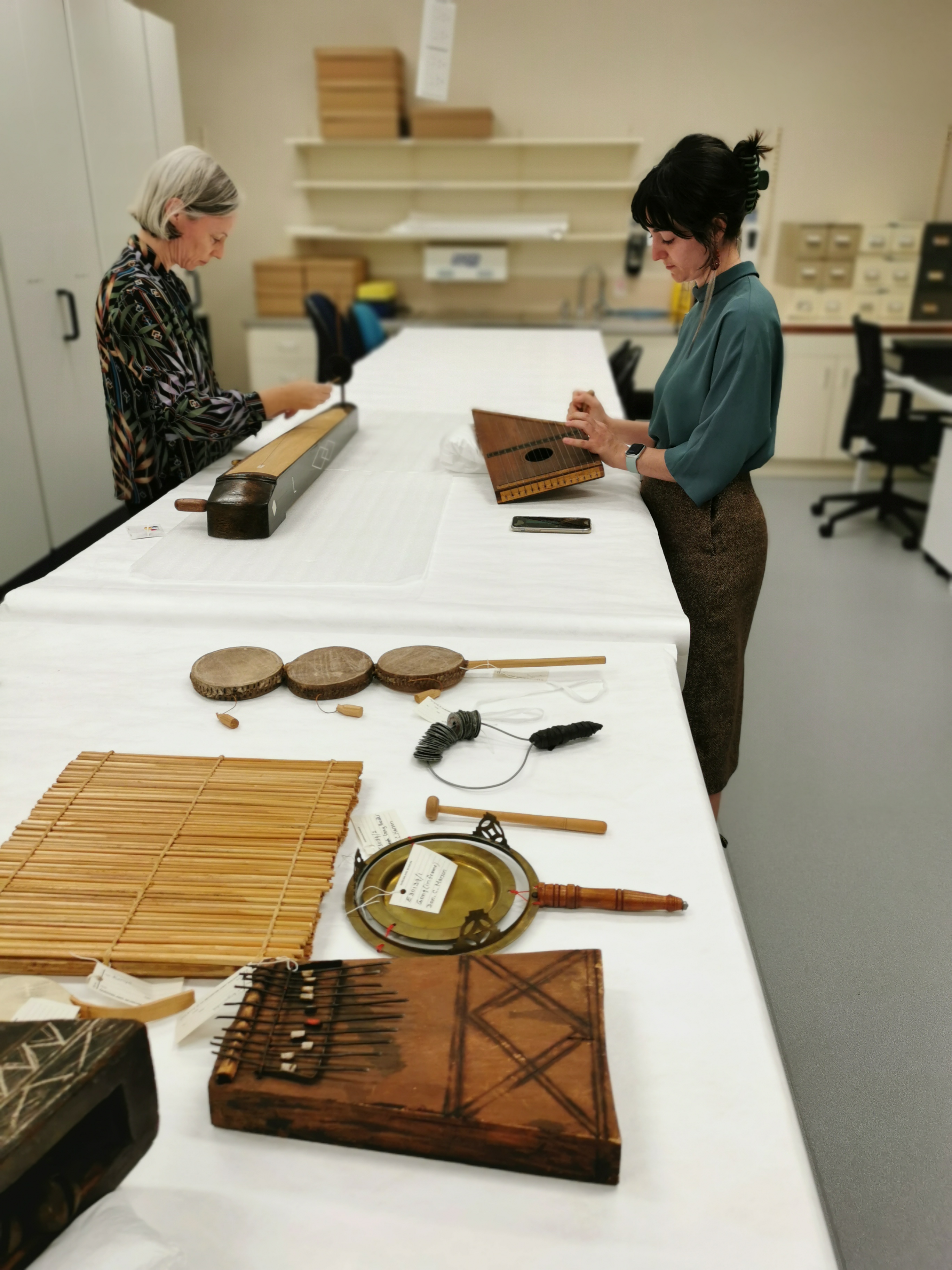

Lexi went away and practiced playing the Auld Lang Syne tune to perfection and returned the day of the interview, ready to play and showcase the zither to a listening audience of around 15,000 people.
Listen to the full ABC Radio interview here:




 Queensland Museum Blog
You must be logged in to post a comment.